Color, form, and the places between
New paintings, four studios, and the instinct that chooses a color. From a conversation with Singulart.
Interview
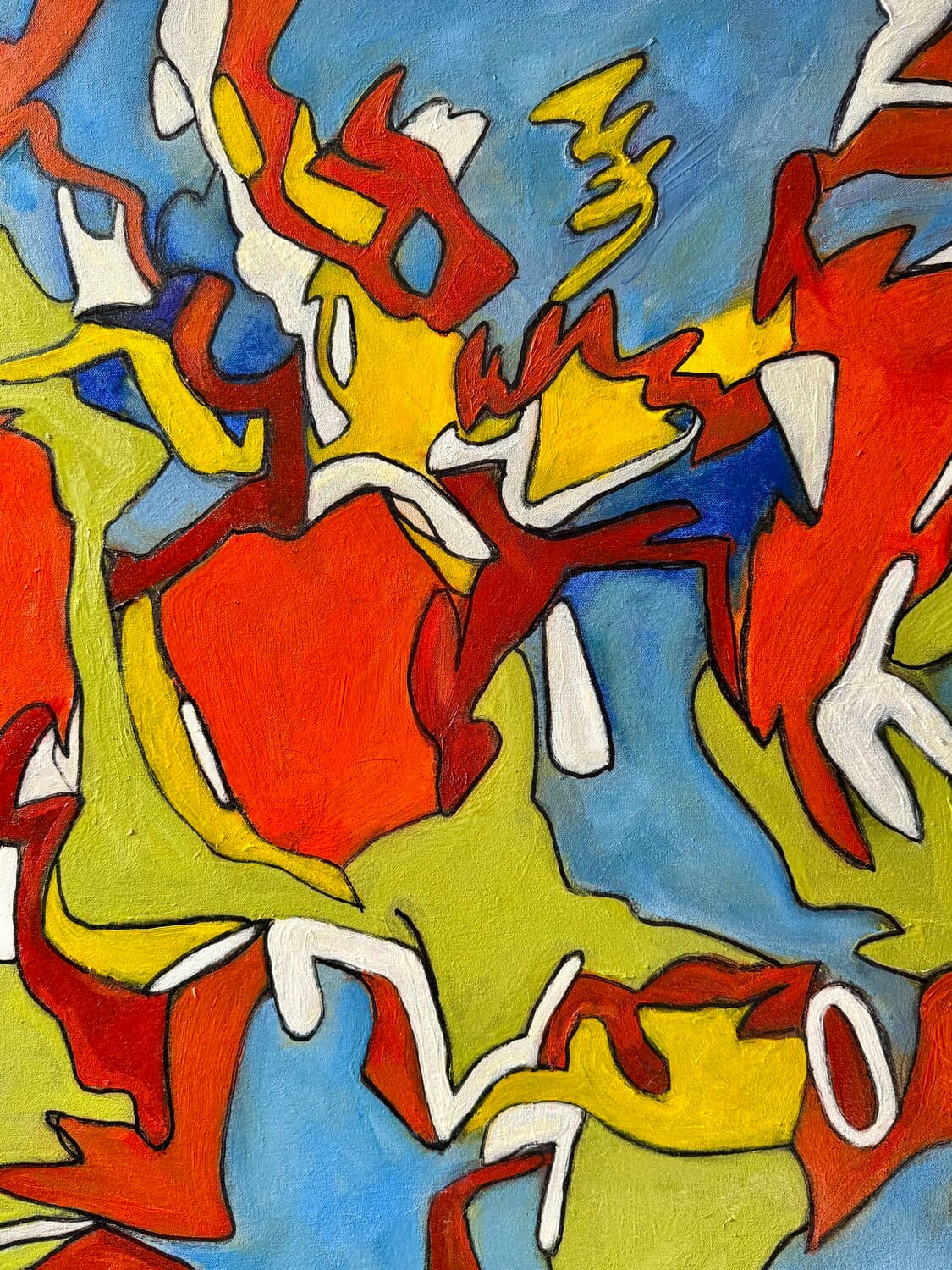
In a conversation published by Singulart on November 21, 2026, Steven W. Miller talks about the pictures he is making now, and about the rooms they come from.
Large color, few lines
The work that interests him is an image he has not seen before. Color, shape, and form are arranged to produce a physical reaction. Most paintings are built from broad areas of color, with only enough line to mark what he already sees in his mind. Now and then he reverses that and lets the line lead.
He points to The Elephant’s Dance, a recent canvas, as a clear example: color and form, a spare line, and a feeling he describes as happiness, curiosity, and a generous reading of how people stand in the world at this moment.
A training he set aside
The strongest influence he names is a refusal. At the Parsons master’s program he was taught a set of academic principles, and he spent the years after setting them down. What remained was his own sense of color. Time in Italy and Morocco did as much as the classroom to shape the painter he is.
The route there was not a studio degree. He has been making things since he was about three. At university he studied creative writing, then wrote plays and short stories. The wish to work with his eyes and hands did not go away. Graduate school at Parsons came after the writing, because that pull had become impossible to ignore.
Italy, New York, Connecticut, Marrakech
A studio in Italy is new. The work now moves between Italy, New York, northwest Connecticut, and Marrakech, and each place keeps its own tempo. The light in Italy and the light in Marrakech are near each other, and both push the color toward something purer. Connecticut and New York ask for a sharper, more measured light. He still thinks of himself as an abstract painter whose subject is nature: particular forms, particular colors, and the next ones he has not caught yet.
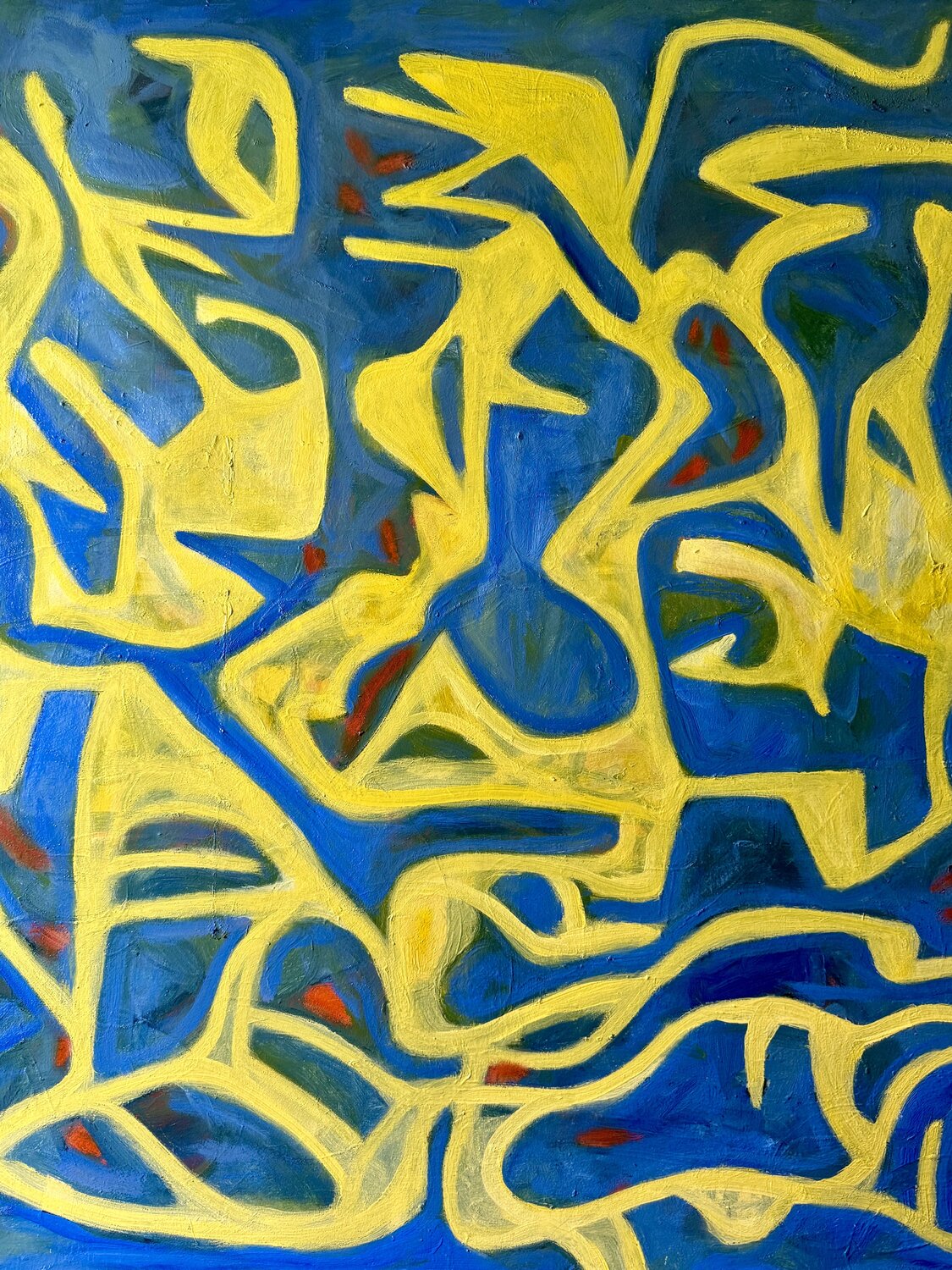
He has also been painting smaller. The subject is the same relation between an inner life and the conditions outside it, and a small canvas can hold more than he expects. Even so, he is more at ease when the idea has room.
Straight onto the canvas
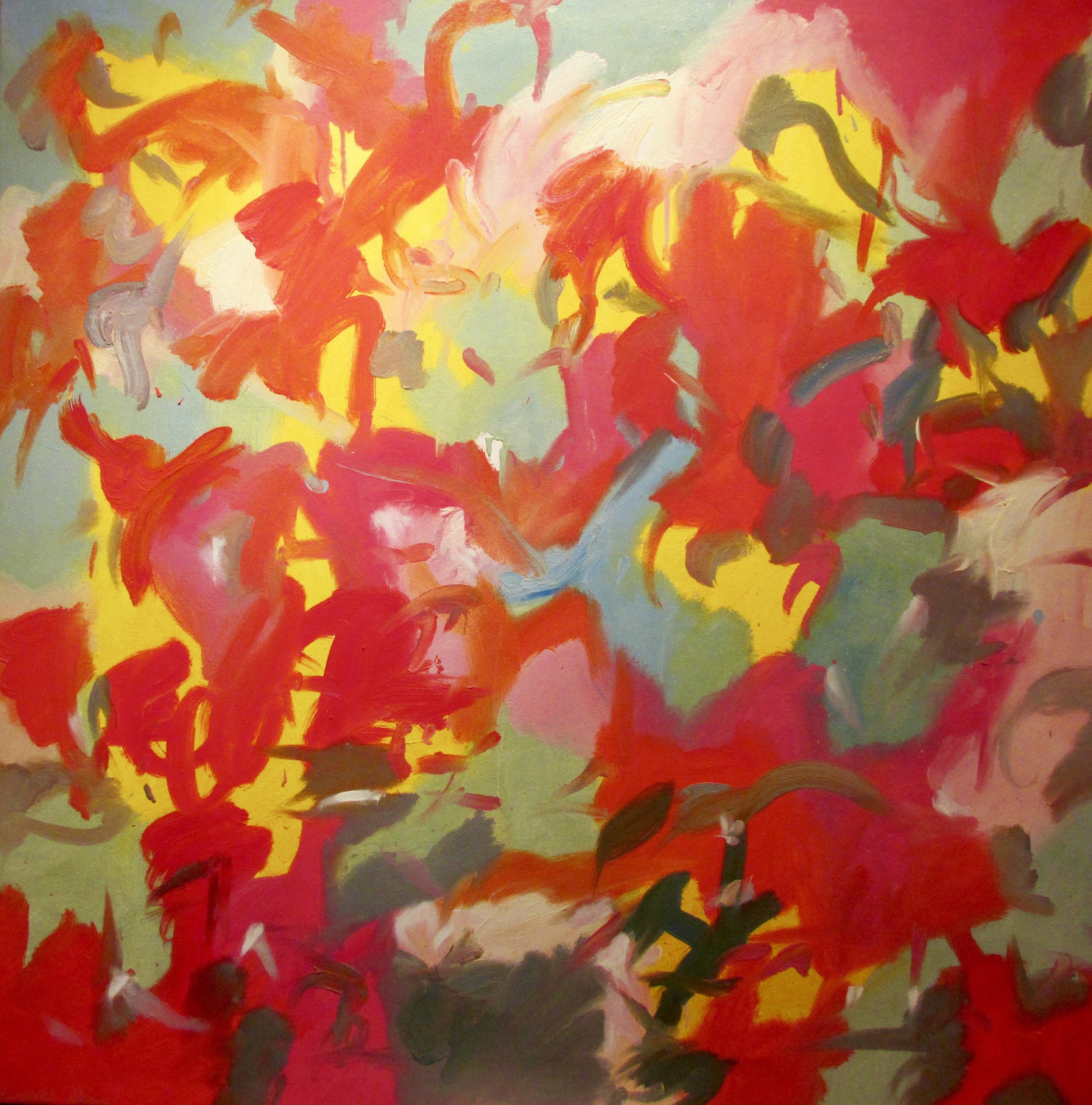
For a long time the paintings began elsewhere. Photographs made with an electron microscope became drawings, and those drawings became the composition. Small color studies followed, gathered from many kinds of images. These days he tends to start on the canvas itself, answering something that just happened. He wants that directness to stay visible, and the picture to feel less rehearsed.
A palette is chosen the same way. He looks for the colors that can carry the feeling of the painting and hold the shapes he is after. Every canvas includes some trial. Most of the decisions, though, are already made in the mind’s eye, and he trusts them.
The Italian studio has turned his attention to painters who worked from religious images, from landscape, and from the figure. Their color and their light come out of nature, and he recognizes that pressure in his own pictures. Marrakech, where he also keeps a studio, offers another version of the same lesson. In North Africa the color and the texture are simply present, in almost everything in view.
Made to his own standard
Exhibitions abroad, and paintings in major collections, matter to him. He is glad of the recognition. It is not the thing he is solving while the work is underway. In the studio the argument is private: how to get an instinct and a feeling onto the surface, and how to meet the standard he sets for himself. The painting is made for that. Anyone else’s acknowledgment is welcome, and it is extra.
Read the conversation on Singulart.